
Corporate · Healthcare Industry

Hospital staff,
moved by the shift clock.

Employee shuttle routes, remote parking lot express service, and multi-building campus circulator contracts for hospitals, health systems, and medical campuses across Puget Sound. We move the people who work in healthcare. We do not transport patients.

15 +
Years in business
100 K+
Happy customers
4 .9+
Customer Rating
Healthcare Campus Operations

Built for shift change

  • Shift coverage24/7 routes
  • Vehicle classSprinter / Mini Coach
  • ADA-accessibleLift-equipped on request
  • Contract termsMonthly / annual
  • Coverage areaPuget Sound
Scope note: Staff and employee transport only. We do not provide patient transport, non-emergency medical transport, or wheelchair-stretcher medical service. See exclusions below.
Seattle Shuttle providing safe transportation in rainy Seattle weather conditions
The Brief

CAMPUS TRANSPORT FOR A
24-HOUR FACILITY.

Hospitals never close. Shift changes happen at 7, 3, and 11 — and when employee parking sits half a mile from the main entrance, the difference between a reliable shuttle and a missed shift shows up on the daily census. Staff transportation isn’t a perk. It’s an operational requirement that touches recruiting, retention, parking footprint, and how many cars are sitting in the patient lot that should be sitting somewhere else.

Seattle Shuttle has fifteen-plus years of group transportation experience in Washington State. For healthcare clients, we run employee shift shuttles, remote parking lot express service, and multi-building campus circulators on monthly or annual contracts. The work is straightforward — known routes, predictable schedules, occasional weather contingencies, and the kind of consistency that lets a nursing supervisor stop worrying about whether the 7 AM shift will clock in on time.

Operational Posture

Campus operations vendor. Not a medical transport provider.

Scope Discipline

This is employee and staff transport. We do not move patients, we do not handle medical transport of any kind, and we do not represent ourselves as a HIPAA-covered entity or business associate. Patient transport requires licensed NEMT operators with very different compliance, training, and equipment — we refer those out and stay in our lane.

Service Tiers

THREE WAYS TO MOVE YOUR WORKFORCE.

Pricing reflects production standards for healthcare campus work. Day rates assume a standard 10-hour service window with one driver per vehicle. Monthly contract rates reflect dedicated vehicle and driver commitment with route consistency. All quotes are project-specific.

Tier One
Employee Shift Shuttle
$850–$2,400/ service day
Scheduled routes covering shift-change windows between designated staff parking and hospital entrances. Sized for the 7 AM, 3 PM, and 11 PM traffic spikes that define a 24/7 facility.
  • Capacity Mix: 14-passenger Sprinter or mini coach
  • Routing Dynamics: Shift-window scheduling (peak coverage)
  • Service Metrics: Fixed-stop route with published timetable
  • Driver Policy: Driver familiar with the campus pickup/drop points
  • Operational Scope: Backup vehicle protocol for mechanical breakdown
  • Weather Contingency: Weather contingency procedures pre-agreed

Request Shift Shuttle Quote →
Tier Three
Off-Site Lot to Hospital Express
$950–$2,800/ service day
Express service between remote employee parking lots and main hospital entrances. Peak-hour intensive — concentrated coverage during shift change with reduced midday service, sized for facilities with parking-footprint constraints.
  • Vehicle Fleet: Sprinter or mini coach configurations
  • Shift Terms: Peak-hour intensive scheduling
  • Route Profiles: Express routing (no intermediate stops)
  • Payload Focus: Multi-vehicle convoys during shift-change windows
  • Coordination Scope: Coordination with hospital security at drop points
  • Weather Protocols: Cold-weather and inclement-weather protocols
Request Express Quote →
How We Work

CAMPUS OPERATIONS WORKFLOW.

The path from facility operations manager email to the first shuttle leaving the lot.
Three workflows cover most healthcare campus engagements — your scope picks one and we adapt from there.
Shift Change Coverage
Service ProtocolShift Change Coverage
01
Operations Brief
Facility ops or HR provides shift schedules, staff parking locations, and entrance preferences. We build a draft route map and timetable inside two business days.
02
Route Walk
On-site walkthrough with the facility coordinator. We confirm pickup zones, drop points, signage placement, and any restricted-access areas. Final timetable locked.
03
Soft Launch
First two weeks run as a pilot — same route, same driver, daily ridership tracked. Adjustments made before transitioning to standing contract operations.
04
Steady State
Standing service with monthly ridership reports and quarterly route reviews. Weather contingency procedures pre-agreed. Single point of contact at the facility.
The Fleet

VEHICLES SIZED FOR CAMPUS OPERATIONS.

Four configurations cover virtually every healthcare campus deployment we run.
ADA-accessible lift-equipped vehicles available on request for any tier.
Sprinter Passenger Van
Primary Shuttle Vehicle
Sprinter Passenger Van

The workhorse for healthcare campus work. Seats up to 14 with overhead storage and easy step-in height for staff carrying bags, scrubs, and laptops. Climate-controlled, USB charging, and a quiet ride that doesn't penalize the night-shift nurse coming off a twelve.
14 passengers
Shift shutticles
Book Sprinter Passenger Van
Mini Coach
High-Volume Coverage
Mini Coach

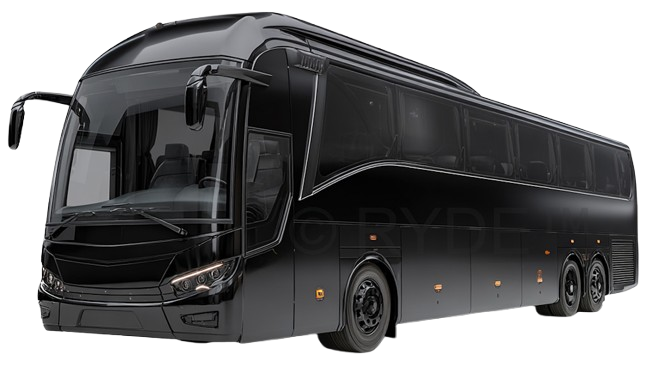
For high-volume shift-change moves and large remote-lot operations. Twenty-four to thirty-six seats depending on configuration, low-floor variants for easier loading, and luggage bay underneath for staff who commute with personal gear.
24–36 passengers
Peak shift change
Book Mini Coach
Lift-Equipped Sprinter
ADA-Accessible
Lift-Equipped Sprinter

Wheelchair-accessible Sprinter with a hydraulic lift, securement points, and trained operator. Available on request for any tier where staff include wheelchair users or where contract terms require ADA-compliant fleet vehicles.
10 pax + 2 WC
ADA-compliant routes
Book Lift-Equipped Sprinter
Wrapped Loop Vehicle
Branded Campus Circulator
Wrapped Loop Vehicle

For multi-year campus circulator contracts, vehicles can be wrapped with the health system's branding, route map, and stop indicators. Dedicated assignment, dedicated driver, and a vehicle that reads as part of the campus rather than as outside vendor.
Sprinter or coach
Contract circulators
Book Wrapped Loop Vehicle
Where We Operate

THE FACILITIES WE SERVE.

Six categories of healthcare facility make up most of the campus operations work we touch.
Each comes with its own scheduling rhythm, building footprint, and staff transportation reality.
B2B Account Terms

HOW HEALTHCARE CAMPUS ACCOUNTS WORK.

Standard terms for hospital systems, facility management companies, and long-term campus operations contracts.
Built around how healthcare accounting handles vendor billing.
01 / Invoicing

Monthly Contract Billing

  • Account Type Circulator & standing-route
  • Invoicing Cycle First business dayinvoiced monthly
  • Payment Terms Net 30 termsfrom invoice date
  • Day-Rate Work Inside 48 hoursof service completion
02 / Onboarding

COI & Vendor Onboarding

  • COI Issuance Before servicecommencement date
  • Endorsement Requirement Additional Insuredfacility named explicitly
  • Health-System Paperwork Vendor onboardingcompleted inside 10 business days
03 / Agreement

Annual Contract Default

  • Contract Term Contracted annuallyongoing shuttle & circulator
  • Renewal Clause Auto-renewalunless 60-day notice given
  • Price Stability Held flatthroughout contract year
  • Rate Adjustments Annual CPI review
04 / Performance

Service-Level Terms

  • Performance Commitments On-time metricswritten into the contract
  • Fleet Management Backup vehicle protocolsnot left to discretion
  • Operational Stability Weather contingencyprocedures pre-documented
  • Accountability Service failure penaltiesfully documented
Compliance & Operations

THE NON-NEGOTIABLES.

What every health system asks before signing a transportation vendor.
Eight items, all in writing, on file before the first vehicle rolls.
WUTC
WUTC Authority
Washington Utilities & Transportation Commission charter authority on file, current and verifiable.
$5M
$5M Commercial Auto
Five million dollar commercial auto liability standard across the fleet. Higher limits issued on health-system request.
DOT
Driver Vetting
DOT physical, MVR pull, drug screening, and background check for every driver. Documentation on file per facility request.
L&I
L&I Coverage
Washington State Labor & Industries workers' comp coverage on all employed drivers. Documentation submitted at vendor onboarding.
ADA
ADA Available
Lift-equipped wheelchair-accessible vehicles on request for any tier. Securement points, trained operators, ADA-compliant routing.
GPS
GPS Dispatch
Every vehicle GPS-tracked. Facility operations gets a live tracking link for vehicles assigned to standing campus routes.
BCGD
Background Screened
Drivers cleared through criminal background screening prior to placement on healthcare campus routes. Re-screened annually.
24/7
24/7 Dispatch
Live dispatch line covers overnight shift-change windows the same way it covers daytime peaks. Direct driver-contact on request.
The Honest Exclusions

What We Don't Do

Healthcare transportation covers an enormous range of services — and pretending to cover patient-side work is how vendors lose contracts and create compliance exposure. Here's what's outside our lane, and where to go instead.

  • Patient transport of any kind We do not transport patients. Not from home to appointment, not from facility to facility, not from discharge to home. Patient transport requires licensed NEMT operators.
  • Non-Emergency Medical Transport (NEMT) NEMT for Medicaid, Medicare Advantage, or commercial insurance patients is a regulated service category requiring specific credentialing we do not hold.
  • Wheelchair & stretcher medical transport Our lift-equipped vehicles serve staff with mobility needs in a campus-operations context. Medical wheelchair and stretcher transport requires NEMT licensure.
  • Emergency or ambulance service We are not an ambulance service, not a first-response provider, and not equipped for any urgent or emergency medical scenario. Emergency response is 911.

The Referral

Puget Sound has a number of licensed NEMT operators who handle patient-side transportation properly. We're happy to refer specific operators based on your facility's coverage area and case mix — and we keep that referral relationship clean and conflict-free.

FAQ

WHAT FACILITY OPERATIONS
ACTUALLY ASKS.

Real questions from real campus operations managers. If yours isn't here, our dispatch line picks up.

Do you transport patients?

No. Seattle Shuttle is a staff and employee transportation service. We do not move patients in any capacity — not ambulatory, not wheelchair, not discharge, not non-emergency medical transport. Patient transport is a regulated service category requiring NEMT licensure, specific driver training, vehicle configuration, and compliance posture that we deliberately don't operate in. If your facility needs patient-side transportation, we'll refer you to licensed NEMT operators in the Puget Sound region.

Are you HIPAA-compliant or a business associate?

No, and we don't represent ourselves as one. Because we transport staff and employees rather than patients, we don't handle Protected Health Information (PHI), don't receive PHI from the facility, and don't function as a HIPAA business associate. We will not sign a BAA we can't honor. If your transportation scope requires a HIPAA-covered vendor — which is typical for any patient-side service — we are not the right vendor for that scope. Vendors who claim HIPAA compliance without an operational program behind it are a liability, and we'd rather decline the work than misrepresent it.

What about staff who use wheelchairs?

Lift-equipped Sprinter vehicles are available on request for any tier. ADA-accessible service for staff who use wheelchairs falls cleanly within our campus-operations scope — securement points, trained operators, and routing that respects the additional load and unload time. This is different from medical wheelchair transport (NEMT), which involves regulated patient-side service. The distinction is the relationship to the rider: staff transportation in a campus context, not medical service.

How fast can you stand up a new shuttle route?

A standing shuttle route can typically be operational within two to three weeks of contract signing. The bottleneck is usually health-system vendor onboarding paperwork rather than our side — once we have a signed contract and vendor approval, route walk, schedule confirmation, and soft launch can complete inside two weeks. Emergency-coverage scenarios (vendor failure, sudden parking displacement) can be operational inside 72 hours with day-rate billing while contracted service is negotiated.

What happens during snow, ice, or extreme weather?

Service modifications during inclement weather are pre-negotiated in the contract, not decided in the moment. Standard protocol: continued service with longer headways during light snow; route modifications during moderate weather; suspension and rebooking during conditions that close the hospital itself or trigger official "no unnecessary travel" advisories. The facility ops team is notified the night before when forecasts indicate likely modifications, with confirmation by 4 AM service day.

Can the vehicle be wrapped with our health system branding?

Yes, for circulator and annual-contract scope. Branded wraps make the shuttle read as part of the campus rather than as an outside vendor, which improves staff adoption and reduces the "is this my ride" confusion at pickup points. Wrap costs are quoted separately and amortized over the contract term; designs are produced in coordination with the health-system marketing or facilities branding office. For day-rate or short-term scope, unbranded vehicles are the default.

Do drivers go through health-system orientation?

Yes, when the facility requires it. Many health systems mandate vendor orientation covering campus access, emergency procedures, security protocols, infection control awareness (for vendors who work near clinical areas), and identification badge issuance. Our drivers complete the orientation before assignment to the route and re-attest annually. The orientation requirement is built into the onboarding timeline rather than retrofitted after service begins.

What does the monthly contract billing look like?

Monthly invoicing on the first business day for service rendered the previous month. Line-item detail includes vehicle assignment, total service hours, route exceptions, and any contract-negotiated adjustments. Optional ridership reporting available — monthly headcount by route segment and shift window if the facility wants the data for parking utilization or HR analytics. Net 30 terms from invoice date, paid by ACH or check at the facility's preference.

Get Started

Send us your campus map.

The fastest path to a quote is the campus brief — shift schedules, parking lot locations, hospital entrances, and the headcount you're trying to move. We turn that into a draft route map and timetable inside two business days.