
Corporate · Public Sector

PUBLIC SECTOR WORK,
DONE BY THE BOOK.

Government event service, agency employee shuttles, and emergency response surge transportation for Washington State municipal, county, state, and special district clients. Prevailing wage capable for event and contract scope. Honest about what we don’t do.

15 +
Years in business
100 K+
Happy customers
4 .9+
Customer Rating
Public Sector Standards

Built for the procurement file

  • Prevailing wageEvent & contract scope
  • Vehicle classSprinter / Mini Coach
  • Bonding capacityPerformance & payment
  • Contract termsPer-event / monthly
  • Coverage areaStatewide WA
Scope note: Non-transit scope. We do not provide paratransit, fixed-route public transportation, or Title VI-regulated transit service. See exclusions below.
Seattle Shuttle providing safe transportation in rainy Seattle weather conditions
The Brief

THE COMPLIANCE FILE
IS THE PRODUCT.

Public sector transportation work moves on its own clock. A city special events coordinator working a ribbon cutting, a county facilities manager standing up an employee shuttle, a state agency activating an emergency operations response — all three have a procurement file that has to balance long before the vehicles roll. Certified payroll has to be filed. Bonding has to be in place. Insurance has to name the right additional insureds. None of it is optional, and none of it gets retrofitted gracefully after the fact.

Seattle Shuttle has fifteen-plus years of group transportation experience in Washington State. For public sector clients, we run government event service for one-time and special event scope, agency employee shuttles on monthly contract, and emergency response surge transportation on activation-based standby. Prevailing wage filings, performance and payment bonding, and the documentation discipline that public sector procurement requires are all part of the offer — for the scope where they actually apply.

Operational Posture

Public sector capable. Non-transit. The honest distinction matters.

Scope Discipline

We bid prevailing wage for one-time/event work and ongoing agency employee shuttle contracts. We do not pursue paratransit subcontracting, fixed-route public transportation, or Title VI-regulated transit service. Those are different compliance programs — FTA reporting, ADA paratransit certification, Title VI service equity plans, drug & alcohol testing programs — that we don't run, and pretending otherwise creates real exposure for both vendors and procurement officers.

 
Service Tiers

THREE WAYS TO SERVE A PUBLIC SECTOR CLIENT.

Day rates assume a standard 10-hour service window with one driver per vehicle. Monthly contract rates reflect dedicated vehicle and driver pool commitment. Emergency response rates reflect surge activation and standby availability. All pricing is project-specific.

Tier One
Government Event Service
$1,100–$2,800/ per vehicle / per event day
One-time and special event service for city festivals, public meetings, government-sponsored events, ribbon cuttings, and dignitary transport. Prevailing wage eligible; certified payroll filed where required.
  • Vehicle Profiles: Sprinter (14 pax) or mini coach (24–36 pax)
  • Wage Compliance: Prevailing wage certified payroll on request
  • Financial Bonding: Performance & payment bonding available
  • RFP Readiness: Public bid process navigation
  • Operational Protocol: Dignitary protocol-trained drivers on request
  • Logistics Capability: Multi-vehicle event coordination

Request Event Quote →
Tier Three
Emergency Response Surge
$1,400–$3,500/ per vehicle / per activation day
Activation-based service for snow events, emergency staff relocation, public works mobilization, and emergency operations center support. Pre-arranged standby contracts with surge activation; pricing reflects standby commitment and rapid deployment capability.
  • Standing Framework: Pre-arranged standby agreement
  • Response Matrix: Activation inside 4 hours of notification
  • Fleet Scaling: Multi-vehicle surge capability
  • Severe Climate: 4WD-capable vehicles for adverse conditions
  • EOC Logistics: 24-hour dispatch coordination with EOC
  • Retainer System: Standby retainer separate from activation rate
Request Standby Quote →
How We Work

PUBLIC SECTOR WORKFLOW.

The path from RFP issuance to invoice payment. Three workflows cover the bulk
of how public sector ground transportation engagements actually run.
Public Bid Process
Service ProtocolProcurement File
01
RFP Review
RFP, RFQ, or IFB document reviewed for scope, prevailing wage requirements, bonding, insurance, and any specific compliance certifications. We decline early if the scope falls outside our lane.
02
Bid Submission
Response submitted on the procurement portal with all required documentation — COI, bonding letter, prevailing wage acknowledgment, references, equipment list, and pricing schedule per the solicitation format.
03
Award & Onboarding
On award, vendor onboarding completes with the agency's procurement office — contract execution, COI issuance, bond posting, payment terms confirmation, and W-9 submission. Pre-service paperwork closes inside ten business days.
04
Service & Reporting
Service rendered against the contracted scope. Certified payroll filed against the agency's prevailing wage reporting cadence — typically weekly or monthly depending on contract terms. Invoicing per the agency's purchase order schedule.
The Fleet

VEHICLES SIZED FOR AGENCY WORK.

Four configurations cover essentially all public sector scope. Vehicle choice is driven by the agency's
specific scope, dignitary protocol when applicable, and emergency response readiness for standby contracts.
Premium Executive SUV
Dignitary Transport
Premium Executive SUV

Suburban-class SUV for dignitary and elected official transport. Tinted glass, leather interior, captain's-chair second row. Chauffeur trained on government protocol — knows when to wait, when to roll, and what stays inside the vehicle. Available with security detail coordination.
6 passengers
Dignitary & protocol
Book Premium Executive SUV
Sprinter Passenger Van
Agency Shuttle Vehicle
Sprinter Passenger Van

Fourteen seats with overhead storage for staff commuting with laptops and personal kit. The standard vehicle for agency employee shuttle routes, multi-building campus circulators, and small-group event service. Climate-controlled and USB-equipped throughout.
14 passengers
Agency shuttle routes
Book Sprinter Passenger Van
Mini Coach
Public Event Coverage
Mini Coach

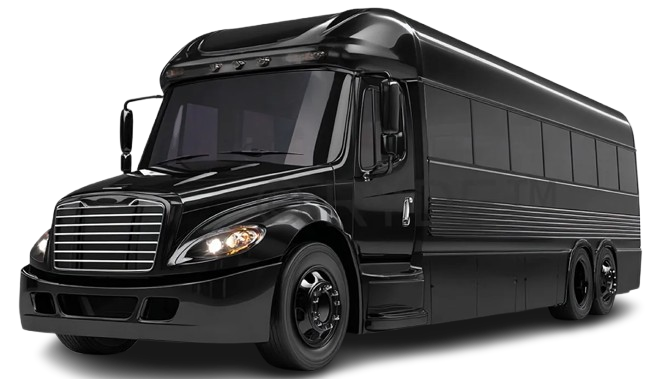
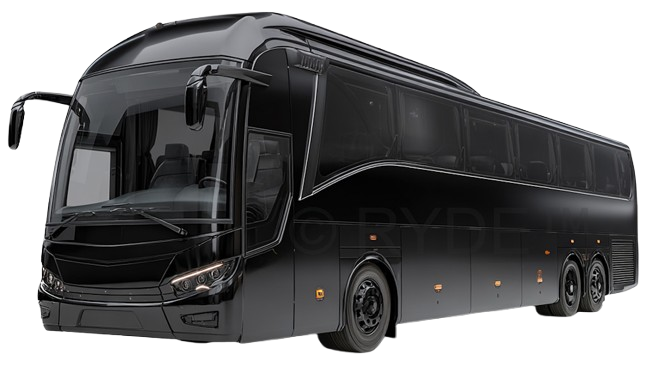
Twenty-four to thirty-six seats for high-volume event service — public festivals, large agency meetings, conference shuttles, and large employee shuttle routes. Luggage bay underneath for events that require attendee bag handling.
24–36 passengers
Event-scale service
Book Mini Coach
4WD-Capable Vehicle
Emergency Response
4WD-Capable Vehicle

All-wheel-drive Sprinter configurations for snow event response and adverse-condition activations. Tire chains stocked at dispatch, emergency kit standard onboard, drivers trained in cold-weather operations. Available under standby retainer for EOC support.
AWD / 4WD
Emergency standby
Book 4WD-Capable Vehicle
Who We Serve

SIX PUBLIC SECTOR CLIENT CATEGORIES.

Six categories cover the bulk of government and municipal ground transportation work we
serve. Each comes with its own procurement process, compliance rhythm, and operational standard.
Municipal Government

City government clients — mayoral offices, city council operations, special events teams, public works departments. Event service for ribbon cuttings and public meetings, employee shuttles for staff parking, dignitary transport for visiting officials.

B2B Account Terms

HOW PUBLIC SECTOR ACCOUNTS WORK.

Standard terms for government, municipal, and special district contracts. Built around
the way public sector accounting and procurement actually run.
01 / Procurement

Public Bid Process

  • Submission Channel Procurement Portalsagency-specific digital hubs
  • Solicitation Documents RFP, RFQ, or IFBvetted against operational scope
  • Pre-Bid Engagement Meeting Attendancemandatory briefings coordinated
  • Regulatory Compliance Procurement Codegoverned by agency bylaws
02 / Labor Compliance

Prevailing Wage Filing

  • Reporting Authority Washington L&Iand contracting public agency
  • Filing Schedule Weekly or Monthlydetermined by contract terms
  • Required Documentation Certified Payrollmapped to exact wage structures
  • Statutory Clearances Intent & Affidavitprocessed systematically
03 / Financial Risk

Bonding Capacity

  • Coverage Formats Performance & Paymentissued per contract mandate
  • Bond Limits Full Contract Valuescaled to meet scope demands
  • Surety Origins WA State Marketsestablished and backed carriers
04 / Fiscal Flow

Invoice & Payment Cycle

  • Standard Terms Net 30 Termsapplicable for state and county
  • Local Jurisdictions Municipal Adjustmentspayment timelines vary by town
  • Billing Prerequisites Purchase Order Schedulealigned with agency fiscal updates
  • Audit Package Compliance Documentationdriver logs, payroll briefs, COI
Compliance & Operations

THE PROCUREMENT FILE BASICS.

What every public sector procurement officer requires from a transportation vendor.
Eight items, all in writing, on file before bid submission.
WUTC

WUTC Authority

Washington Utilities & Transportation Commission charter authority on file, current and verifiable through the WUTC public lookup.
$5M

$5M Commercial Auto

Five million dollar commercial auto liability standard across the fleet. Higher limits and agency-specific endorsements issued on procurement request.
WAGE

Prevailing Wage

Certified payroll filing capability per Washington L&I requirements. Wage determination tracking and Intent & Affidavit submissions handled in-house.
DOT

Driver Vetting

DOT physical, MVR pull, drug screening, and criminal background check for every driver. Agency-specific badging completed where required.
L&I

L&I Coverage

Washington State Labor & Industries workers' comp coverage on all employed drivers. Documentation submitted at vendor onboarding for every contract.
HOS

Federal HOS Compliance

Drivers operate inside FMCSA Hours of Service limits. No exceptions for agency pressure or premium offered. Driver pools for multi-shift coverage.
GPS

GPS Dispatch

Every vehicle GPS-tracked. Agency contracting officer or facility manager gets a live tracking link for vehicles assigned to the contract.
24/7

24/7 Dispatch

Live dispatch line covers emergency response activations and after-hours agency events the same way it covers daytime work. Direct EOC coordination available.
The Honest Exclusions

What We Don't Do

Public sector transportation has an enormous range of services — and pretending to cover the transit-regulated portion of that range without the underlying compliance program is how vendors create RFP disqualification risk and post-award contract failures. Here's what's outside our lane, and the reasoning behind each.

  • ADA paratransit subcontracting We don't subcontract paratransit service for regional transit agencies. Paratransit requires ADA paratransit certification, FTA-grade compliance, specialized vehicles, and driver training programs we don't operate.
  • Fixed-route public transportation We don't operate fixed-route public bus or shuttle service open to general public ridership. Fixed-route transit is a regulated service category requiring Title VI service equity planning we don't maintain.
  • Title VI-regulated transit service Any transportation service that triggers Title VI obligations — public-facing transit, FTA-funded service — falls outside our compliance footprint. We don't file Title VI plans because we don't operate the services that require them.
  • FTA-funded ongoing contracts We don't pursue contracts funded by Federal Transit Administration grants. FTA funding triggers compliance requirements (drug & alcohol testing programs, NTD reporting, DBE participation tracking) that we deliberately don't operate.
  • School bus service School transportation is regulated under separate Washington State Patrol school bus rules with its own driver certification, vehicle standards, and inspection regime. We're not a certified school bus operator.
  • Non-emergency medical transport NEMT for Medicaid, Medicare Advantage, or commercial insurance patients requires specific credentialing we don't hold. Public sector NEMT contracting should source NEMT-licensed vendors directly.

The Reasoning

Stating these exclusions clearly is the credibility play with public sector procurement. Procurement officers know which contracts require Title VI plans, paratransit certification, and FTA-grade compliance — and they respect vendors who know the difference. Pretending to cover scope you can't actually fulfill is how you lose award protests, get debarred, or get sued.

FAQ

WHAT PROCUREMENT OFFICERS ACTUALLY ASK.

Real questions from agency contracting officers, special events coordinators, and
emergency management directors. If yours isn't here, dispatch picks up around the clock.
Are you prevailing wage capable?

Yes, for event work and ongoing agency employee shuttle contracts. We file certified payroll with Washington L&I, track wage determinations against the relevant occupation code, and handle Intent & Affidavit submissions per L&I requirements. Prevailing wage cadence is set by the contract — typically weekly filings for state and county work, monthly for some municipal contracts. For event scope, certified payroll covers the event days worked; for ongoing contracts, it's filed on the agency's standard cadence.

Will you bid paratransit or fixed-route transit contracts?

No. We deliberately don't pursue paratransit subcontracting, fixed-route public transportation, or Title VI-regulated transit service. Those contracts require ADA paratransit certification, FTA-grade drug and alcohol testing programs, Title VI service equity plans, NTD reporting capability, and DBE participation tracking — a compliance infrastructure that's an entire separate operational program from what we run. We respect procurement officers enough not to bid scope we can't actually fulfill, and we'd rather get filtered out at the eligibility stage than win an award we have to back out of post-award.

What's your bonding capacity?

Performance and payment bonding is available for contracts where bonding is a procurement requirement. Bond limits are sized to contract value with surety from established Washington State bonding markets. For typical agency event work and employee shuttle contracts, bonding falls within our standard capacity. Large multi-year contracts with elevated bonding requirements get a separate underwriting review during bid preparation. We'll tell you up front if the bonding requirement exceeds what we can post — better to know that before submitting than after award.

How fast can you activate emergency response?

Pre-arranged standby contracts activate inside four hours of notification for most scope, with multi-vehicle surge capability scaling against the standby fleet committed to the contract. Snow event activations typically pre-stage equipment based on forecasting; EOC support deployments coordinate directly with the agency's emergency management office during the activation window. Standby retainer pricing is separate from activation rate — agencies pay the retainer to hold the capacity, and pay the activation rate when service is rendered.

Do drivers go through agency-specific orientation?

Yes, where the agency requires it. Many state and county agencies mandate vendor orientation covering facility access, security protocols, badging requirements, and any agency-specific operational procedures. Our drivers complete orientation before assignment and re-attest annually. For high-security agency facilities — emergency operations centers, certain state agency offices, executive branch transport — additional background screening above our standard vetting is completed during contract onboarding.

Can you handle dignitary protocol for visiting officials?

Yes. For dignitary and visiting official transport — visiting elected officials, foreign delegations, agency leadership, judicial transport — we assign chauffeurs trained on government protocol: discretion, appropriate timing, security coordination, and the kind of professional bearing that public sector clients expect. We coordinate with law enforcement security details when applicable and respect the privacy and operational requirements of dignitary transport. NDA-ready drivers available for sensitive protocols.

What does the certified payroll documentation look like?

Certified payroll filed in the Washington L&I PWIA system per the agency's contract terms. Documentation includes driver names, classification codes, hours worked, prevailing wage rates applied, and fringe benefits as required by the wage determination. Filing cadence matches contract terms — weekly is typical for state and county work, monthly for some municipal contracts. Certified payroll records are retained per L&I record retention requirements (three years standard) and available for agency audit on request.

How does the invoice cycle work for state and county contracts?

Invoicing per the agency's purchase order terms — typically Net 30 from invoice date for state and county. Each invoice includes driver reports, certified payroll for the billing period, COI verification, and line-item detail by vehicle, by service day, and by hours. Documentation packet is submitted with the invoice rather than as separate transmittal, so the agency's accounts payable team has the full file at receipt. Municipal terms vary — some cities pay Net 30, others Net 45, occasionally Net 60 for larger jurisdictions.

Get Started

Send us your solicitation.

The fastest path to a quote for public sector scope is the RFP, RFQ, or solicitation document itself. We review for scope alignment and submit a complete bid response with all documentation per the procurement format.