
Corporate · Construction Industry

Crew movement
at megaproject scale.

Park-and-ride crew shuttles, multi-shift project contracts, and pre-shift staging express service for commercial and civil construction projects across the Pacific Northwest. Built for 200 to 1,000+ worker counts, the 5 AM stage time, and the GC who already has too many spreadsheets open.

15 +
Years in business
100 K+
Happy customers
4 .9+
Customer Rating
Project-Ready Standards

Built for the megaproject

  • Stage time5 AM routine
  • Worker scope200–1,000+
  • Vehicle classMini coach / motorcoach
  • Contract termsMonthly / project-duration
  • Coverage areaStatewide WA
Scope note: Private commercial construction only. We do not bid prevailing wage, Davis-Bacon, or federally-funded projects. See exclusions below.
Seattle Shuttle providing safe transportation in rainy Seattle weather conditions
The Brief

THE PARKING PROBLEM SOLVES
THE SCHEDULE PROBLEM.

The constraint on every Pacific Northwest megaproject is the same: site-adjacent parking either doesn’t exist, was given up to construction laydown, or got rezoned mid-project. You can run a 600-worker data center build and still only have parking for 80 vehicles within walking distance. Which means the GC’s choice is either (a) burn fifteen minutes per worker on shuttle improvisation every morning, or (b) hand the workforce mobilization to someone whose only job is moving 600 people from a remote lot to the gate before stage time.

That second option is what this page is about. Seattle Shuttle has fifteen-plus years of group transportation experience in Washington State. For commercial and civil construction clients, we run park-and-ride crew shuttles between remote lots and project gates, multi-shift project contracts for projects with continuous shift coverage, and pre-shift staging express service for the 5 AM peak that defines a megaproject morning. Predictable schedules, motorcoach-class vehicles, and a dispatch line that’s already awake when your superintendent calls in the truck count.

Project Type

Commercial and civil. Private contracting only. Data centers, hospitals, stadiums, infrastructure.

Scope Discipline

This is private commercial construction work. We don't bid prevailing wage projects, we don't certify payroll under Davis-Bacon, and we don't take federally-funded contracts. We're also not a union signatory carrier. If your project has those requirements, this isn't the right vendor — and pretending otherwise creates exposure for both of us.

Service Tiers

THREE WAYS TO MOVE A WORKFORCE.

Day rates assume a standard 10-hour service window with one driver per vehicle. Monthly contract rates reflect dedicated vehicle and driver commitment with route consistency across the project duration. All pricing is project-specific.

Tier One
Park-and-Ride Crew Shuttle
$900–$2,600/ service day
Standard crew transport between a designated remote parking lot and the project gate. Mini coach or motorcoach for high-volume morning peaks, sized to clear a parking lot inside a 30-minute window.
  • Fleet Profiles: Mini coach (24–36 pax) or motorcoach (47–56 pax)
  • Route Structure: Fixed-stop loop between remote lot and gate
  • Shift Terms: 10-hour service day; OT after 14 hours
  • Driver Policy: Driver assigned to project for service day continuity
  • Safety Standards: Backup vehicle protocol for breakdowns
  • Weather Protocols: Weather contingency procedures pre-agreed

Request Park-and-Ride Quote →
Tier Three
Pre-Shift Staging Express
$1,100–$3,000/ service day
High-volume express service concentrated in the 90-minute window before stage time. Multi-vehicle convoys clearing remote lots fast, designed for projects where 400+ workers need to be on-site for a single morning stage.
  • Configuration: Motorcoach configurations (47–56 pax)
  • Deployment: Convoy-style departures during peak window
  • Routing Dynamics: Express routing (no intermediate stops)
  • Gate Protocols: Coordinated with site security at gate
  • Midday Coverage: Light midday coverage; full evening unstaging
  • Scalability Focus: Scalable up or down by daily worker count
Request Express Quote →
How We Work

PROJECT-SIDE WORKFLOW.

The path from preconstruction meeting to ribbon cutting. Three workflows
cover the bulk of how megaproject crew transportation actually runs.
Pre-Construction Mobilization
Service ProtocolPre-Construction Mobilization
01
Preconstruction Brief
GC project manager provides peak worker count by month, shift schedule, remote lot location, and gate access protocol. Initial vehicle sizing inside two business days.
02
Lot & Gate Walk
On-site walk with the project superintendent. Confirm pickup zones, loading capacity, gate clearance, ingress and egress timing. Final route locked against the stage time.
03
Ramp-Up
Service scales with the worker count curve. Single vehicle through early site prep, scaling to multi-vehicle convoys as the project enters peak labor. Schedule reviewed weekly during ramp.
04
Peak Operations
Full fleet committed to the project at peak labor. Dedicated drivers, branded vehicles, contract-grade service levels. Standing point of contact at the project office.
The Fleet

VEHICLES SIZED FOR THE WORKER COUNT.

Four configurations cover the spread of construction work we move. Vehicle choice is driven by lot
capacity, gate clearance, and the worker count we need to clear inside a stage-time window.
Sprinter Passenger Van
Small Project Workhorse
Sprinter Passenger Van

Used for early-site ramp-up before the worker count justifies coach vehicles, supervisor and trade-specific moves during peak operations, and the supplemental midday runs that mini coaches don't make sense for.
14 passengers
Ramp / supervisor runs
Book Sprinter Passenger Van
Mini Coach
Mid-Size Crew Vehicle
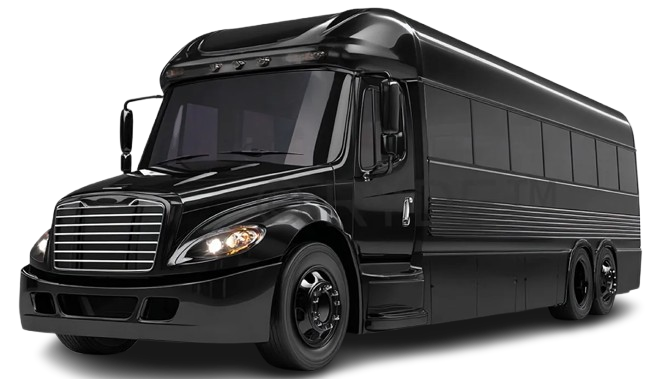
Mini Coach

Twenty-four to thirty-six seats with overhead storage and luggage bay underneath. The workhorse for park-and-ride routes on mid-sized projects — sized to move full crews without committing to a 56-passenger motorcoach footprint.
24–36 passengers
Standard park-and-ride
Book Mini Coach
Full Motorcoach
High-Volume Coach
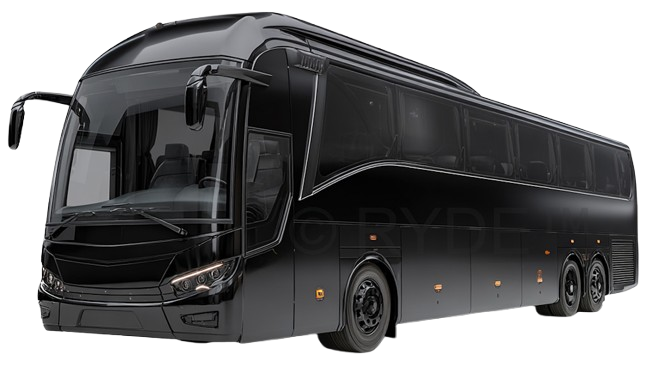
Full Motorcoach

Forty-seven to fifty-six seats with full underfloor luggage capacity, restroom-equipped variants available. The vehicle for clearing a remote lot in three departures instead of seven. Standard for projects above 400 worker count.
47–56 passengers
400+ worker projects
Book Full Motorcoach
Wrapped Project Coach
Branded Contract Vehicle
Wrapped Project Coach

For multi-year project contracts, vehicles can be wrapped with the GC's project branding, the developer's name, or generic site identification. Dedicated assignment, dedicated drivers, and a vehicle that reads as part of the project rather than as outside vendor.
Coach or mini coach
Multi-year contracts
Book Wrapped Project Coach
Project Categories

THE WORK WE MOVE.

Six project categories cover the bulk of commercial and civil construction crew
transport we run. Each has its own labor curve, shift rhythm, and parking footprint reality.
B2B Account Terms

HOW PROJECT ACCOUNTS WORK.

Standard terms for general contractors, project developers, and construction management
firms. Built around the way large construction accounting handles vendor billing.
01 / Invoicing

Monthly Project Invoicing

  • Account Type Multi-shift & contract
  • Invoicing Cycle First business dayinvoiced monthly
  • Payment Terms Net 30 termsfrom invoice date
  • Ramp-Up Work Inside 48 hoursday-rate terms applied
  • Clauses Pay-when-paidnegotiable on long contracts
02 / Onboarding

COI & GC Onboarding

  • COI Issuance Before servicecommencement date
  • Named Insureds GC & Project Owneradded as additional insureds
  • GC Paperwork Vendor onboardingcompleted inside 10 business days
  • Agreement Type Subcontractor agreementstandard compliance
03 / Agreement

Project-Duration Contracts

  • Contract Term Project durationtypically 12 to 36 months
  • Scaling Cycles Milestone-basedmanaged ramp-up & down
  • Price Stability Held flatthroughout contract term
  • Rate Adjustments Annual CPI reviewapplies to multi-year work
04 / Performance

Service-Level Terms

  • Core Metrics On-time performancewritten into the contract
  • Risk Mitigation Backup vehicle protocoland weather contingencies
  • Ramp Execution Ramp-up schedulingpre-documented parameters
  • Accountability Liquidated damagesavailable on negotiation
Compliance & Operations

THE NON-NEGOTIABLES.

What every GC asks before signing a transportation vendor. Eight
items, all in writing, on file before the first vehicle rolls.
WUTC
WUTC Authority
Washington Utilities & Transportation Commission charter authority on file, current and verifiable.
$5M
$5M Commercial Auto
Five million dollar commercial auto liability standard across the fleet. Higher limits and project-specific endorsements issued on GC request.
DOT
Driver Vetting
DOT physical, MVR pull, drug screening, and criminal background check for every driver. Documentation on file per project request.
HOS
Federal HOS Compliance
Drivers operate inside FMCSA Hours of Service limits. We do not run drivers past federal limits regardless of project pressure or premium offered.
L&I
L&I Coverage
Washington State Labor & Industries workers' comp coverage on all employed drivers. Documentation submitted at vendor onboarding.
GPS
GPS Dispatch
Every vehicle GPS-tracked. Project superintendent or labor coordinator gets a live tracking link for vehicles assigned to the site.
BCGD
Background Screened
Drivers cleared through criminal background screening before placement on construction site routes. Re-screened annually for ongoing contract work.
24/7
24/7 Dispatch
Live dispatch line covers night-shift and swing-shift contingencies the same way it covers day shift. Driver-direct contact on request.
The Honest Exclusions

What We Don't Do

Construction transportation covers a broad scope — and pretending to cover all of it is how vendors lose project contracts in the first month. Here's what's outside our lane, and the reasoning behind each exclusion.

  • Prevailing wage / Davis-Bacon projects We don't bid prevailing wage work and don't file certified payroll. Federally-funded and government-adjacent projects should source vendors that operate in that compliance lane.
  • Union signatory work We are not a union signatory carrier. Projects requiring Teamsters or other union signatory transportation should contract with signatory carriers directly.
  • DOT Hours-of-Service violations We do not run drivers past FMCSA hours-of-service limits regardless of project pressure or premium offered. A double-shift that requires HOS violation gets quoted as two drivers, not one driver run past limits.
  • Equipment or material hauling We move people. We do not haul tools, equipment, materials, or trailers. Equipment transport is a separate scope handled by trucking and equipment-hauling vendors.
  • Crew-cab pickup substitution We do not substitute crew-cab pickups for shuttle service to undercut motorcoach pricing. The cost savings come from compromised safety, insurance, and labor compliance — not from operational efficiency.
  • Public infrastructure Public roads, public transit infrastructure, and government-owned facility construction are outside our scope. We work private commercial and private civil construction only.

The Reasoning

Every exclusion above represents a category where doing the work badly is worse than not doing it. We'd rather lose a bid by being honest than win one by overpromising and watching the relationship deteriorate when the actual scope hits.

FAQ

WHAT GENERAL CONTRACTORS
ACTUALLY ASK.

Real questions from project managers and labor coordinators.
If yours isn't here, dispatch picks up around the clock.
Will you take prevailing wage projects?

No. Seattle Shuttle is a private commercial construction vendor. We do not bid prevailing wage work, do not file certified payroll under Davis-Bacon, and do not take federally-funded contracts. Prevailing wage operations require a separate compliance program — certified payroll filings, wage determination tracking, fringe benefit accounting — that we don't run, and pretending otherwise creates real exposure for both vendors and project owners. If your project has prevailing wage requirements, source vendors who operate in that lane.

Are you a union signatory carrier?

No. We operate a professional non-union fleet. For projects requiring Teamsters or other union signatory transportation, contract with signatory carriers directly. Most private commercial construction in the Puget Sound region does not have union signatory requirements on crew shuttles, but project labor agreements vary — confirm your PLA terms before procurement.

How fast can you stage at 5 AM?

Vehicles are typically staged at the remote lot 30 minutes before the first crew arrival, which on a 5 AM stage means vehicles in position by 4:30. The driver knows the gate, the security protocol, and the parking diagram. Early-morning operations are standard for construction work — most of our project days start before sunrise.

What's the ramp-up curve look like on a multi-year project?

A typical large project starts with single-vehicle service during site prep and early foundation work, scales to multi-vehicle convoys as the project enters peak labor (usually months 6 through 18), and ramps down through MEP and finish work toward closeout. We size the contract against the labor curve provided by the GC, with monthly invoicing that reflects actual vehicle count per month rather than a flat fee across the full project duration. Adjustments to the curve are negotiated quarterly during the active project window.

Can you handle a double shift on a single driver?

No. Federal Hours-of-Service limits cap commercial driver duty time, and a double shift typically exceeds those limits. We solve this with a driver pool rather than a single driver — vehicles can run 24-hour coverage, but the driver assignments rotate against FMCSA limits. Projects asking for single-driver double-shift coverage are typically being quoted by vendors who violate HOS, and that's a liability we won't take on regardless of premium.

Do drivers go through site-specific orientation?

Yes. Many general contractors mandate that all field personnel and vendor operators complete the site-specific safety and logistics orientation before accessing active zones. Our assigned project drivers complete this training, clear PPE compliance protocols, map out contractor-specific drop zones, and receive gate badges before rolling services. The safety orientation requirement is integrated right into our standard 10-day vendor onboarding timeline.

What does the monthly invoice look like for a project contract?

Monthly invoicing on the first business day for service rendered the previous month. Line-item detail by vehicle, by shift, with total service hours and any contract-negotiated adjustments — extra vehicles during peak weeks, weather-related modifications, or trade-specific add-on runs. Optional ridership reporting available — daily headcount per route per shift if the GC wants the data for labor reconciliation. Net 30 from invoice date, paid by ACH or check at the GC's preference.

What happens during a weather event?

Weather contingency procedures are written into the contract, not improvised in the moment. Standard protocol covers light snow with continued service at modified headways; moderate snow or ice with route adjustments and extended headways; severe weather with service suspension paired with crew rebooking the following day. Project superintendents get notified the night before when forecasts indicate likely modifications, with final confirmation by 3 AM on service day. Site closure decisions are the GC's call; transport modifications are coordinated to match.

Get Started

Send us your labor curve.

The fastest path to a quote is the project brief — peak worker count by month, shift schedule, remote lot location, and gate access. Two business days from brief to draft vehicle count.