Corporate · Parking Operations

The lot is full.
The shuttle solves it.

Off-site parking shuttle service for airport parking facility operators, corporate overflow lots, and event venue parking across Puget Sound. Daily lot service, contracted operator partnerships, and event-day surge capacity — built on fifteen years of group transportation experience in Washington State.

15 +
Years in business
100 K+
Happy customers
4 .9+
Customer Rating
Parking Operations Standards

Built for the headway clock

  • Coverage24/7 capability
  • Vehicle classSprinter / Mini Coach
  • Headway target6–15 minutes
  • Contract termsDay-rate / monthly
  • Coverage areaPuget Sound
Scope note: Transportation only. We don't operate the parking lot itself, provide valet, or staff attendants. See exclusions below.
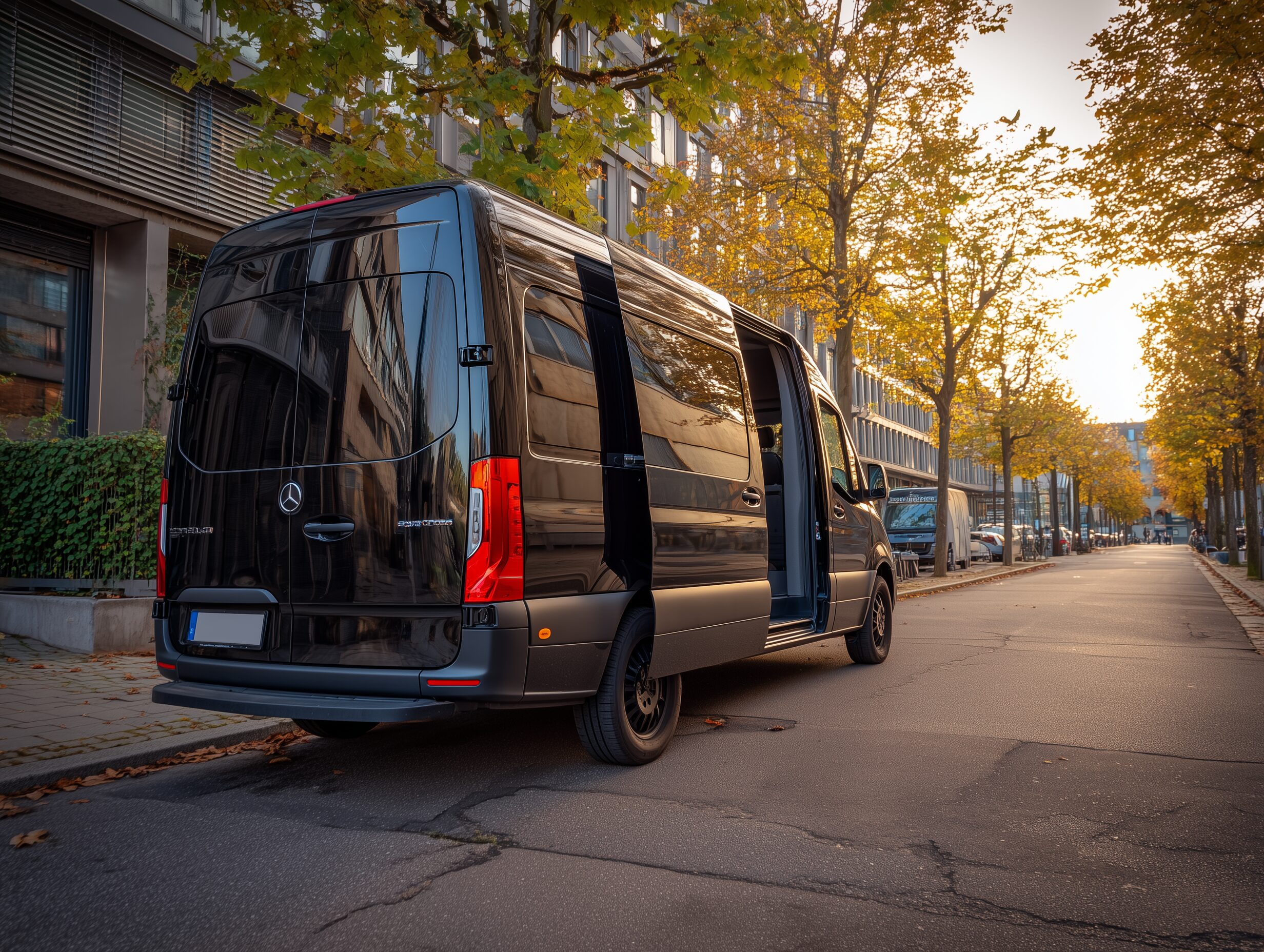
Seattle Shuttle providing safe transportation in rainy Seattle weather conditions
The Brief

THE SHUTTLE IS THE PRODUCT.

For an off-site parking operator, the parking is a commodity — there’s a lot down the road that holds the same number of cars. What customers actually choose between is the experience of getting from the parking space to the terminal, the office, or the venue. That’s not a parking decision. That’s a shuttle decision. The lots that retain customers are the lots whose shuttles arrive on time, whose drivers help with bags, and whose service doesn’t fall apart at 4 AM or during a snowstorm.

Seattle Shuttle has fifteen-plus years of group transportation experience moving people across Washington State. Off-site parking shuttle service is a focused application of that capability — disciplined routing, predictable headways, professionally-trained drivers, and the operational standards that translate cleanly from airport parking facilities to corporate overflow lots to event-day surge service at stadiums and convention centers. Three customer types; one operational standard.

Operational Posture

Transportation specialist. Not a parking operator.

Honest Positioning

This is a growth segment for us. We've operated parking shuttle service across multiple project types and bring the broader group transportation track record — but if you're looking for a vendor with a dozen current contracts at named facilities, ask us in two years. What we offer today is professional fleet, disciplined operations, and the kind of focused attention that comes from being deliberate about scaling into a new segment.

Service Tiers

THREE WAYS TO RUN PARKING SHUTTLE SERVICE.

Day rates assume a standard 10-hour service window with one driver per vehicle. Monthly contract rates reflect dedicated vehicle and driver commitment with route consistency. Event-day pricing reflects surge capacity for compressed-window service. All pricing is project-specific.

Tier One
Daily Lot Shuttle
$800–$2,400/ per service day
Standard day-rate service for parking lot to destination shuttling. Works for ad-hoc operator coverage, corporate overflow lots during peak weeks, and any parking shuttle scope that doesn't yet justify a standing contract.
  • Fleet Fleet Profiles: Sprinter (14 pax) or mini coach (24–36 pax)
  • Route Structure: Fixed-stop loop between lot and destination
  • Service Capacity: 10-hour service window; OT after 14 hours
  • Driver Policy: Driver assigned to single client for service day
  • Operations Standard: Backup vehicle protocol for breakdowns
  • Guest Experience: Customer-facing service standards (bag assist, ADA)
Request Daily Quote →
Tier Three
Event-Day Parking Surge
$1,200–$2,800/ per event day
Compressed-window service for event venue parking — game days, conventions, festivals, and large gatherings. Multi-vehicle surge capacity clearing parking lots fast in the two-hour pre-event window, scaled down to single-vehicle return service after the event.
  • Deployment: Multi-vehicle convoys for pre-event surge
  • Configuration: Mini coach or motorcoach configurations
  • Logistics Focus: Coordination with venue security and traffic control
  • Return Windows: Post-event return service with extended window
  • Booking Terms: Repeat-event booking for multi-date series
  • Standby Protocols: Standby vehicle for capacity overrun
Request Event Quote →
How We Work

PARKING SHUTTLE WORKFLOW.

Three workflows cover most parking shuttle scope. Your customer type picks the
workflow — facility operator, corporate parking program, or event venue.
Operator Contract Setup
Service ProtocolOngoing Facilities
01
Operator Discovery
Facility operator or corporate parking program shares lot capacity, peak demand windows, destination point, and customer experience expectations. Initial fleet sizing inside two business days.
02
Lot Walk
On-site walkthrough of pickup zones, signage placement, drop-off coordination at the destination, and customer-facing service standards. Final route and headway targets locked.
03
Contract Launch
Annual contract with monthly invoicing, dedicated vehicles assigned, branded wraps applied if elected. Driver pool oriented to the facility, customer service standards reinforced during driver training.
04
Quarterly Review
Ridership data, headway compliance, and customer feedback reviewed quarterly. Vehicle counts, headway targets, and route adjustments implemented on a rolling basis without contract amendment.
The Fleet

VEHICLES SIZED FOR THE HEADWAY TARGET.

Four configurations cover essentially every parking shuttle deployment. Vehicle choice is driven
by lot capacity, peak ridership per headway, and the customer experience the facility wants to project.
Sprinter Passenger Van
Standard Lot Vehicle
Sprinter Passenger Van

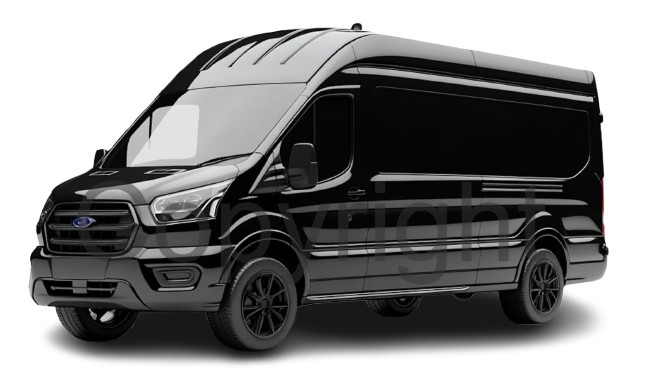
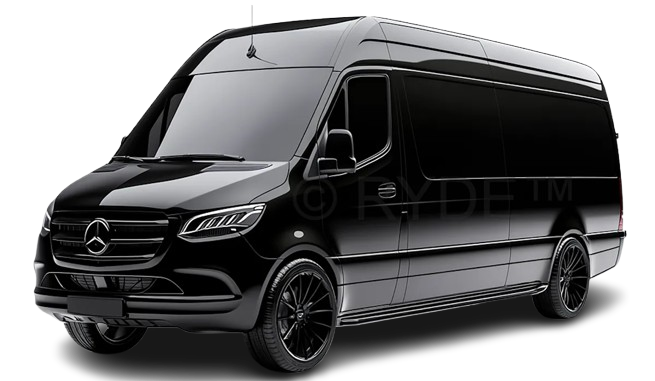
Fourteen seats with overhead bin space for carry-on bags and personal items. Climate-controlled, easy step-in height, and a footprint that fits cleanly into standard parking lot drive aisles. The default vehicle for most operator and corporate parking shuttle work.
14 passengers
Standard parking loops
Book Sprinter Passenger Van
Mini Coach
High-Volume Coach
Mini Coach

Twenty-four to thirty-six seats with luggage bay underneath — important for airport-adjacent operator service where customers travel with full luggage. Low-floor variants available for easier loading on high-throughput lots.
24–36 passengers
Airport & event volume
Book Mini Coach
Full Motorcoach
Event-Day Volume
Full Motorcoach

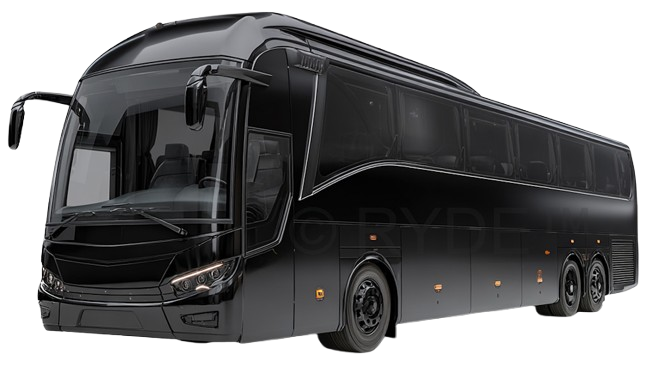
Forty-seven to fifty-six seats for event-day surge clearing. Used when a single departure needs to move 50+ riders rather than waiting for a second mini coach run. Restroom-equipped variants available for longer post-event return routes.
47–56 passengers
Event-day surge
Book Full Motorcoach
Wrapped Operator Coach
Branded Contract Vehicle
Wrapped Operator Coach

For multi-year operator contracts, vehicles can be wrapped with the parking facility's branding, route information, and customer service messaging. Customers read the shuttle as part of the parking experience rather than as outside vendor — which is exactly the point.
Sprinter / mini coach
Operator contracts
Book Wrapped Operator Coach
Who We Serve

SIX PARKING SHUTTLE MARKETS.

Six customer categories cover the spread of off-site parking shuttle work we move. Each comes with
its own scheduling rhythm, ridership pattern, and customer experience expectation.
B2B Account Terms

HOW PARKING ACCOUNTS WORK.

Standard terms for facility operators, corporate parking programs, property
managers, and event venues. Built around how parking and property operations handle vendor billing.
01 / Billing

Monthly Contract Billing

  • Account Type Operator & Standing Contract
  • Invoicing Cycle First business dayinvoiced monthly
  • Payment Terms Net 30 termsfrom invoice date
  • Day-Rate Cycles Inside 48 hourspost-service completion
  • Event Logistics Same-week billingexpedited invoicing schedule
02 / Onboarding

COI & Vendor Onboarding

  • COI Issuance Before servicecommencement parameters
  • Additional Insured Operator or Ownerexplicitly named on file
  • Onboarding Windows Within 10 daysstandard compliance turnaround
  • Agreement Type Vendor agreementfully structured criteria
03 / Agreements

Annual Contract Default

  • Contract Term Annual contractwith auto-renewal loops
  • Termination Notice 60-day noticerequired by either party
  • Price Stability Held flatthroughout current contract year
  • Rate Adjustments Annual CPI reviewapplied to renewal terms
  • Volume Tiers Negotiable ratesavailable on larger accounts
04 / Metrics

Service-Level Terms

  • Core Parameters Headway complianceand on-time performance
  • Risk Mitigation Backup protocolspre-allocated replacement units
  • Weather Policies Contingency metricspre-documented route protocols
  • Accountability Service creditsavailable upon negotiation
Compliance & Operations

THE NON-NEGOTIABLES.

What every parking facility operator and property manager asks before signing a
transportation vendor. Eight items, all in writing, on file before the first vehicle rolls.
WUTC
WUTC Authority
Washington Utilities & Transportation Commission charter authority on file, current and verifiable.
$5M
$5M Commercial Auto
Five million dollar commercial auto liability standard across the fleet. Higher limits issued on operator or property owner request.
DOT
Driver Vetting
DOT physical, MVR pull, drug screening, and criminal background check for every driver. Customer-service training reinforced during onboarding.
HOS
Federal HOS Compliance
Drivers operate inside FMCSA Hours of Service limits. Multi-shift coverage handled through driver pools, not single-driver extended-hour assignments.
L&I
L&I Coverage
Washington State Labor & Industries workers' comp coverage on all employed drivers. Documentation submitted at vendor onboarding.
GPS
GPS Dispatch
Every vehicle GPS-tracked. Operator or property manager gets a live tracking link for vehicles assigned to standing service.
ADA
ADA Available
Lift-equipped wheelchair-accessible Sprinter available on request for any tier. Securement points, trained operators, ADA-compliant routing.
24/7
24/7 Dispatch
Live dispatch line covers overnight and event-day windows the same way it covers daytime peaks. Driver-direct contact on request.
The Honest Exclusions

What We Don't Do

Parking operations cover a broad set of services — and pretending to cover all of them is how vendors create awkward conversations after the contract signs. Here's what's outside our lane, and the reasoning behind each.

  • Parking lot operation We don't operate the parking lot itself. No revenue collection, no gate management, no lot maintenance, no parking enforcement. We're a transportation vendor under contract to the lot operator or property owner.
    end of list element
  • Valet service No valet parking. No vehicle handling, no key management, no customer-vehicle responsibility. Valet is a separate operational scope handled by valet-specific service providers.
  • Parking attendants & lot staffing We don't staff parking attendants, lot greeters, or on-site customer service positions. Lot staffing is the parking operator's scope, not ours.
  • Parking enforcement We don't tow, ticket, boot, or otherwise enforce parking rules. Enforcement is handled by the lot operator or contracted enforcement service.
  • Vehicle storage We provide transportation, not vehicle storage. Customer vehicles remain the responsibility of the parking facility and its operator.
  • On-site lot management We don't manage daily lot operations, attendant schedules, or facility maintenance. Our scope ends at the shuttle's tires.

The Reasoning

Parking operators we work with already have the lot side handled. What they need is a transportation vendor that does shuttle service well and doesn't try to insert itself into operational scope it has no business in. That's the entire pitch.

FAQ

WHAT PARKING OPERATORS ACTUALLY ASK.

Real questions from facility operators, corporate parking programs, and event
venues. If yours isn't here, dispatch picks up around the clock.
Do you have existing contracts with airport parking facilities?

We've operated parking shuttle service across multiple project types and customer segments over our fifteen years in the Washington State group transportation market. Parking shuttle service is a focused growth segment for us — we bring strong operational fundamentals, professional fleet, and disciplined dispatch, but we're not the vendor with a dozen current contracts at named facilities. What we offer is the broader track record, the right fleet for the work, and the focused attention that comes from being deliberate about scaling into this segment. If existing facility-specific references are a hard requirement, we can talk transparently about what we have and don't have.

What headway can you maintain on a high-volume lot?

Six to fifteen minute headways are typical, with the target driven by lot capacity, peak ridership, and the vehicle class deployed. A single Sprinter on a short loop maintains 8–12 minute headways comfortably during normal demand. High-volume periods scale to multi-vehicle service with 6-minute headways achievable on routes under 12 minutes round-trip. Headway targets are written into the operator contract with backup vehicle protocols for when a unit goes out of service.

Can you handle 24-hour airport shuttle coverage?

Yes, through a driver pool model. FMCSA Hours of Service limits prevent any single driver from running 24-hour coverage solo — that's a federal regulation, not a Seattle Shuttle preference. We staff overnight coverage with rotating drivers across shifts, with continuity prioritized inside each shift window. The vehicle is dedicated to the operator; the driver assignments rotate against federal limits. Total fleet count is sized to maintain headway targets across all shifts including overnight.

How fast can you scale up for a single event?

Single-event surge capacity is typically arrangeable inside two to three weeks of contract signing for most scope. Compressed timeline events — large gatherings booked inside that window — can be quoted on availability rather than a guaranteed yes. Recurring event series (game days, weekly festivals, multi-date conventions) are contracted as packages, with the entire date series locked at signing.

What happens during snow or extreme weather?

Weather contingency procedures are written into the operator contract, not improvised in the moment. Standard protocol covers light snow with continued service at extended headways; moderate snow or ice with route modifications; severe weather with service suspension paired with operator notification 12 hours ahead when forecasts allow. Service decisions are coordinated with the operator — we don't unilaterally suspend service on a contracted route.

Can the vehicle be wrapped with our facility branding?

Yes, for contracted operator service and multi-year accounts. Branded wraps make the shuttle read as part of the parking facility's customer experience rather than as outside vendor — exactly the right framing for a market where the shuttle is the differentiator. Wrap costs are quoted separately and amortized over the contract term; design is produced in coordination with the operator's marketing or branding team. Day-rate and event-day work uses unbranded vehicles by default.

Do drivers help passengers with luggage?

Yes, and it's a core operational standard for airport parking work. Drivers assist with loading luggage at the lot and unloading at the terminal drop point. For corporate and event work the luggage volume is lower but the same service standard applies — drivers help with bags, equipment, or whatever else passengers are carrying. Customer service training is part of driver onboarding for parking shuttle assignments specifically.

What does the monthly contract invoice look like?

Monthly invoicing on the first business day for service rendered the previous month. Line-item detail by vehicle, by service window, with total service hours and any contract-negotiated adjustments. Optional ridership reporting available — daily passenger counts and headway compliance data if the operator wants the data for capacity planning. Net 30 from invoice date, paid by ACH or check at the operator's preference.

Get Started

Send us your lot brief.

The fastest path to a quote is the lot brief — lot capacity, peak demand window, destination point, and customer experience expectations. Two business days from brief to vehicle sizing for most scope.